Workers, streaming & performance
Off the main thread by default
Parsing runs in a Web Worker so a large file never blocks the UI. The adapters create the
worker for you; the low-level entry point is GcodeParseSession (@chestnutlabs/gcode-parser),
a session client that speaks a small versioned protocol to the worker.
Streaming & progressive preview
Input is streamed into the parser, and the renderer can append geometry as it arrives — so a large print shows a growing preview (time-to-first-paint) rather than a spinner until the whole file is parsed. The session reports progress as it goes.
The progressivePreview prop chooses how that stream is presented (3D):
'lines'(default) — show the growing line preview as it parses, then swap in the final build. Fast visual feedback; best when a quick "it's working" signal matters more than a single reveal.'hold'— keep reporting progress (drive your own bar from theparse-progressbytes), but show nothing until the finished, correctly-coloured model is ready, then reveal it in one pass. Use this when the streamed preview would render before the file's own colours are known and read as "rendering twice."'off'— no built-in preview at all; you supply your own loading treatment until the model is ready.
progressivePreview only affects what shows while parsing — it never changes the final image or its
quality.
Bounded by design
Untrusted input is treated as untrusted. The parser enforces resource limits — maximum input
bytes, maximum segments, and a cumulative allocation budget — and returns a structured, bounded
partial result when a limit is hit (with a stopReason) instead of hanging or crashing. An
adversarial-input corpus exercises these paths in CI. Container extraction (.gcode.3mf) is
likewise hardened against zip-bombs and path traversal.
The batteries worker, and the escape hatch
- Default (zero setup): the adapters build the batteries worker — every supported dialect
adapter plus
.gcode.3mfsupport — via the bundler-nativenew Worker(new URL(...))pattern. Vite resolves it out of the box. - Custom: pass
createWorkerfor a slim build, custom dialect adapters, other bundlers, or strict-CSP environments. Both paths are first-class.
Rendering performance
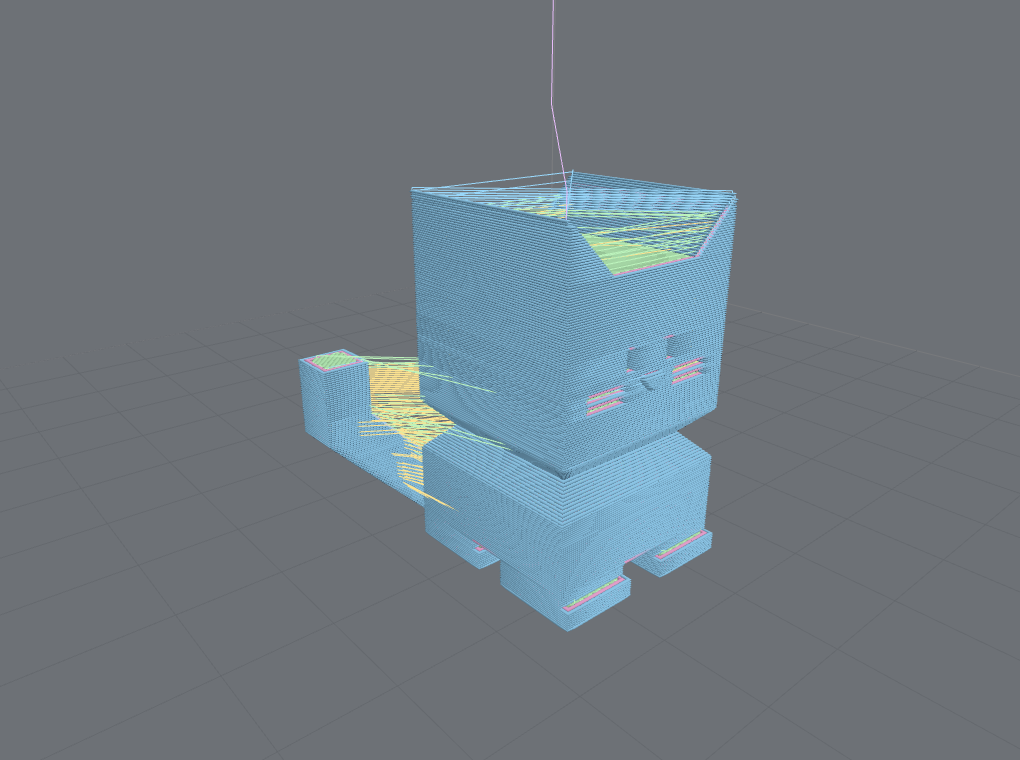
The Three.js renderer keeps interactions cheap: layer chunks with decimation disclosure, layer clip and segment scrub as draw-range updates (no geometry rebuilds), tube-or-line geometry with automatic quality fallback, per-file build plates, and WebGL context-loss recovery. Pair a bounded parse with draw-range navigation and even very large toolpaths stay responsive.
| Tubes | Lines |
|---|---|
 |
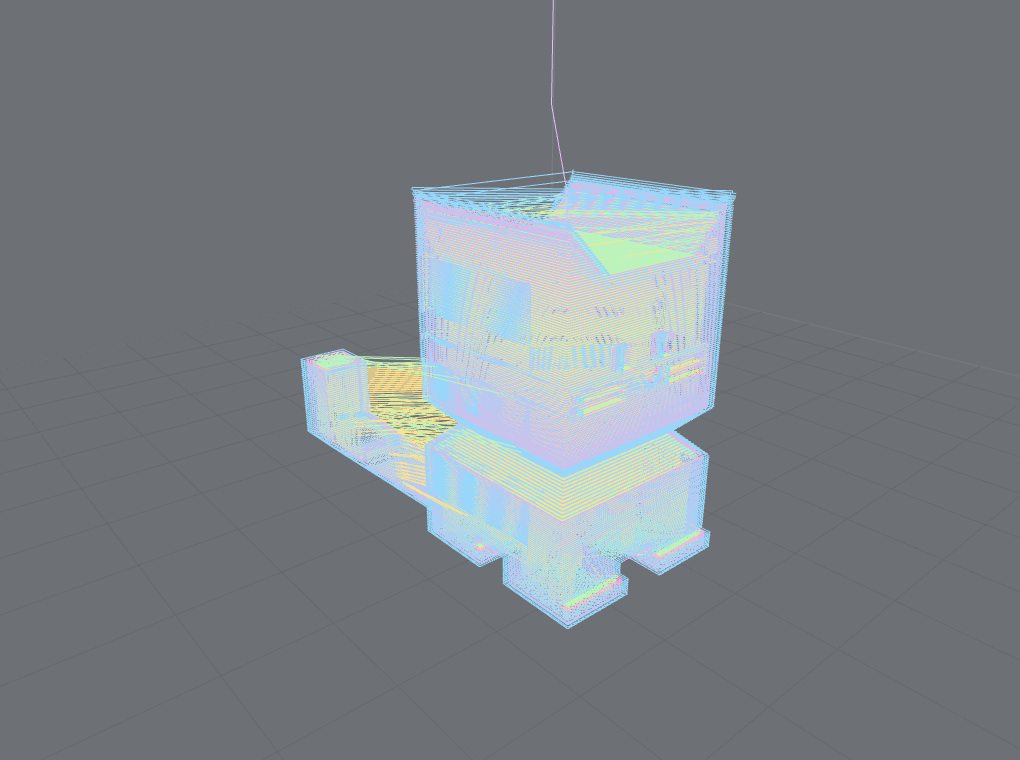 |
| Lit 3D cross-sections — the default for models that fit the geometry budget. | Flat one-pixel paths — lighter, for very large files or low-GPU devices. |
A parallel geometry worker pool builds the tubes off the main thread (byte-identical to serial,
degrading pool → serial → lines under a memory budget, all disclosed), and getRenderStats()
reports exactly what happened — backend, hardware-vs-software GPU, draw calls, and timings — so "why
is this slow / what am I running on" is answerable, never guessed.